Many self-employed buyers put off applying for a mortgage because they assume they won’t qualify. Newrez recently surveyed 99 mortgage loan originators, 96 of whom said they work with small business owners who use business income to qualify for a mortgage. Unless otherwise noted, the survey percentages in this article are based on responses from those 96 originators.
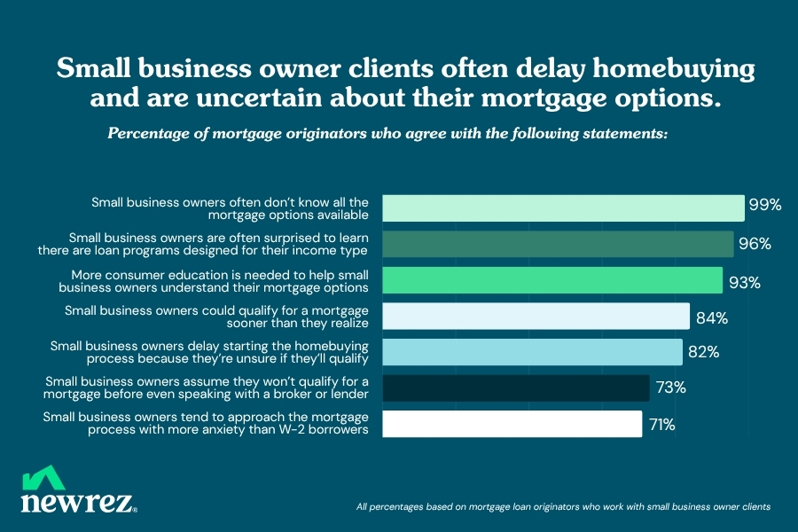
Eighty-two percent of those who work with small business owners said their clients delay the homebuying process for that reason. But 84% said many of those clients could qualify sooner than they realize.
If you own a business or are self-employed, you may have more mortgage options than you realize.
Here’s what mortgage professionals told us about the challenges small business owners face and what you should know before ruling yourself out.
Click to navigate:
- Small Business Owners Are Active in the Mortgage Market
- Why Can Getting a Mortgage Feel More Complicated When You're Self-Employed?
- Small Business Owners Need to Know More About What's Available
- Conventional Mortgages Aren't the Only Option
- What Do You Know About Interest-Only Loans?
- Don't Rule Yourself Out
Small Business Owners Are Active in the Mortgage Market
Of all 99 mortgage originators surveyed, 97% (or 96 respondents) said they work with small business owners who use business income to qualify for a mortgage.
Among respondents who work with small business owners, the median share of overall loan volume involving these borrowers was 25%. Thirty-five percent said these clients accounted for 26% to 50% of their loan volume.
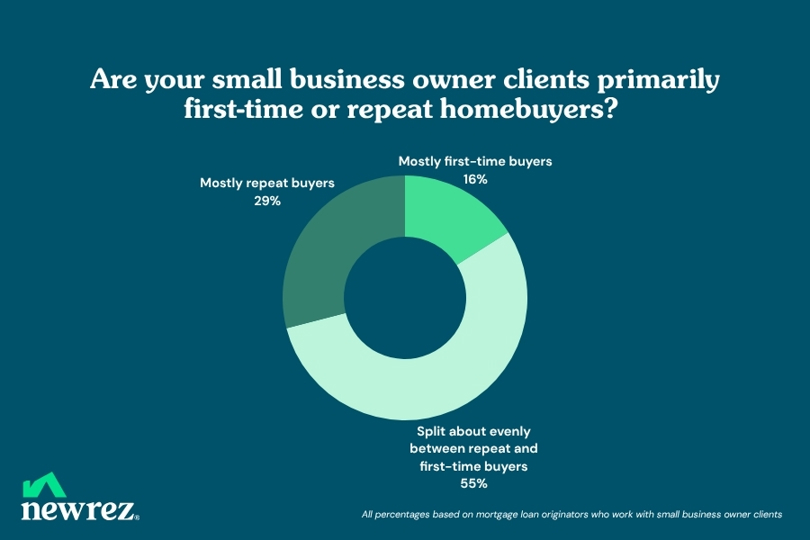
Whether you’re a first-time buyer or you’ve already purchased a home, you’re in good company. Fifty-five percent of originators who work with small business owners said these clients were split about evenly between first-time and repeat buyers.
Why Can Getting a Mortgage Feel More Complicated When You're Self-Employed?
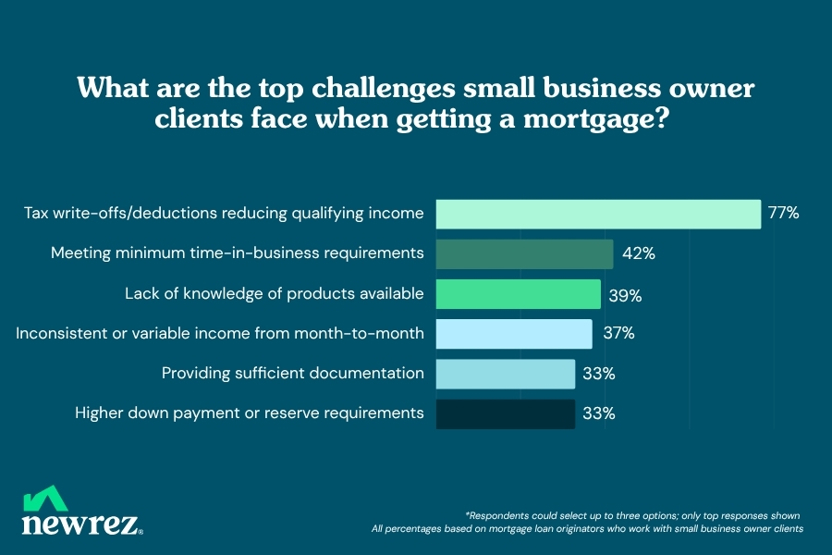
When mortgage originators who work with small business owners were asked to identify the top challenges these clients face, 77% selected tax write-offs or deductions reducing qualifying income, making it the most commonly selected challenge. You can see other frequently selected challenges in the chart below.
If you’re self-employed, trying to determine if you’ll be eligible for a mortgage isn't always as simple as asking, "How much does my business make?"
How your income is documented, the loan program you're considering and other qualification requirements can all affect your eligibility.
Small Business Owners Need to Know More About What’s Available
Originators who work with small business owners said awareness is as big a hurdle as financial qualifications. 65% said the two were equally significant, and 75% said lack of awareness was at least as significant, if not more so.
And the survey found that lack of awareness was an even bigger problem when originators were asked about misconceptions.
Conventional Mortgages Aren’t the Only Option
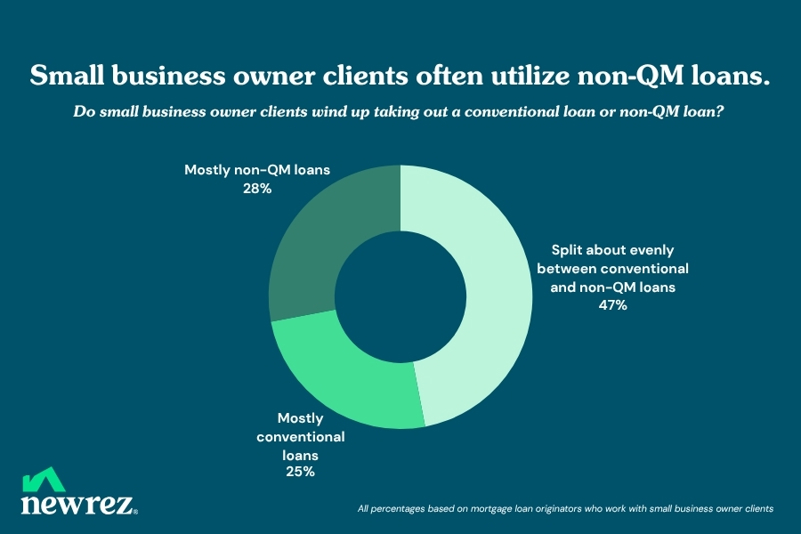
Self-employed borrowers might end up taking out a non-QM loan. Twenty-five percent of survey respondents who work with small business owners said their clients mostly end up with conventional loans, 28% said mostly non-QM loans, and 47% said their small business clients are about evenly split between the two.
Non-qualified mortgage (non-QM) loans can provide another path for borrowers who might not be able to qualify for a loan with traditional mortgage requirements.
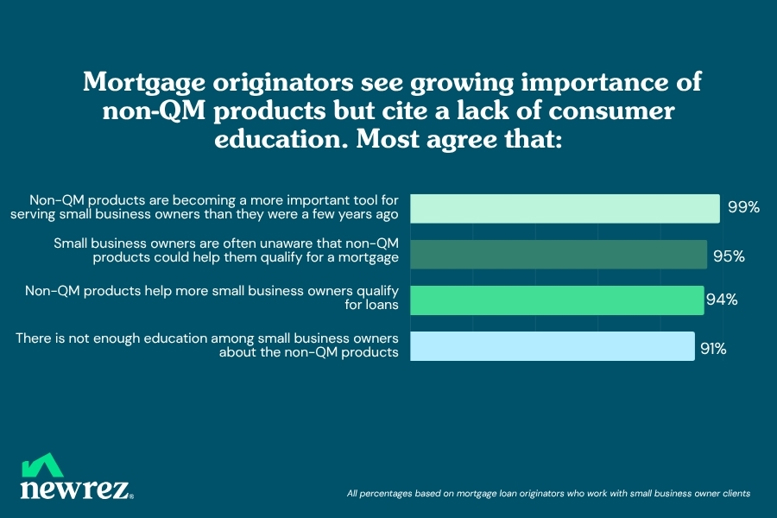
The survey suggests mortgage professionals view these products as an important option for small business owners. Among the originators who work with these clients, 94% said non-QM products help more small business owners qualify for loans, and 99% said non-QM products are becoming a more important tool for serving these borrowers than they were a few years ago.
But 95% of respondents who work with small business owners said they are often unaware that non-QM products could help them qualify.
Newrez’s SmartSelf loan, part of its non-QM Smart Series, may allow eligible borrowers to use bank statements, 1099s or a profit-and-loss statement to show business income.
You might want to look into one of these alternative loans and see if it could be a good fit for you and your circumstances.
What Do You Know About Interest-Only Loans?
Among the originators who work with small business owners, 82% said small business owners are often unaware of interest-only loan options. At the same time, 71% said interest-only options help small business owners better manage cash flow.
An interest-only mortgage allows you to pay only the interest due during an initial period rather than paying both principal and interest from the start.
That can mean lower payments during the interest-only period. However, those payments don’t pay down your principal. You may be able to make extra payments toward principal if you choose, and your required payment amount can increase after the interest-only period ends.
So this isn't automatically a "better" mortgage for a business owner. It's another option that eligible borrowers can discuss with a mortgage professional based on their finances, goals and how their income fluctuates.
Don’t Rule Yourself Out
Owning a small business may make your mortgage application different from a W-2 employee's, but different doesn't mean impossible.
Mortgage professionals see challenges, from tax deductions and variable income to documentation requirements. But they also see many prospective borrowers waiting to start the process because they don't realize what options may be available.
If you're considering buying a home, don't rule yourself out based on assumptions about self-employed income. Reach out to Newrez even if you’re not sure how the process works, or if you just want to learn more about whether you can qualify. That way you can find out what your options are and what loans might be worth considering.