Understanding the role of a Real Estate Broker could help you better understand the homebuying process. While brokers can serve a role similar to Real Estate Agents, brokers can also manage agents and help power the transaction behind the scenes.

At Newrez, we believe knowledge is power. This guide will teach you the basics of what Real Estate Brokers do, how they differ from agents, and how their expertise supports a smooth, compliant and successful real estate transaction. Once you’re ready to secure a mortgage, reach out to us and we’ll help you find a loan to fit your circumstances.
Who Is a Real Estate Broker?
A Real Estate Broker is a licensed real estate professional who has completed advanced education beyond that of a Real Estate Agent and passed a state-required broker exam. They also have prior experience working as agents themselves.
They are legally authorized to operate their own brokerage, and may operate independently or hire and supervise other agents. Brokers can oversee transactions and take on additional legal and financial responsibilities that agents cannot.
Real Estate Brokers differ from Mortgage Brokers, who assist in financing the purchase of a property with a loan.
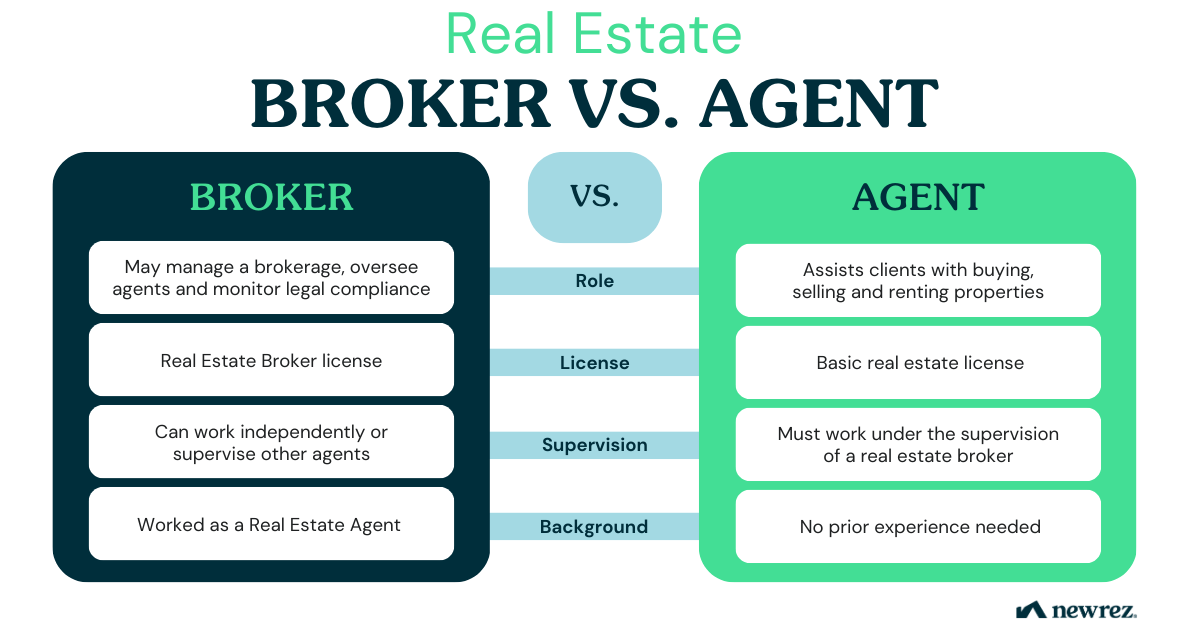
Agents guide consumers through viewing or listing properties, submitting or accepting offers and negotiating the terms of purchase/sale, among other support services. Brokers may do these things, but if they work on a managerial or principal level, they might also ensure that real estate activities occur within their brokerage are legally sound.2
Types of Real Estate Brokers and Their Functions
Associate Broker
Fully licensed as a broker but works under another broker instead of running their own firm.
Managing Broker
Often oversees operations, agent activity, training and management of administrative staff.
Principal or Designated Broker
Holds legal responsibility for the brokerage and ensures the firm meets state regulatory standards.
How Real Estate Brokers Impact Your Transaction
Although homebuyers and sellers may not interact directly with a principal-level or managerial-level broker, their influence shapes every step of the process.
1. They Validate Contracts and Legal Documents
Brokers review and approve the documents necessary to complete a transaction. Their oversight helps protect buyers, sellers and agents from contractual risk or errors.
2. They Resolve Disputes
When challenges emerge such as disagreements with other brokerages, brokers sometimes step in as mediators. Their role is to apply their legal knowledge and facilitate a compromise.
3. They Provide Compliance, Risk Management, and Oversight
Brokers carry legal responsibility for all transactions within their firm.
- State regulations are followed
- Fair housing laws are upheld
- Agents are trained and licensed
- Documentation is properly stored and executed
Navigate the Housing Market with Confidence
With the assistance of knowledgeable real estate professionals, homebuyers and sellers can have an easier time finding what they’re looking for and experience a smooth closing. Real estate professionals often work in partnership with mortgage professionals to give buyers and sellers a great experience.
When you’re ready to find a loan, our mortgage experts have the know-how to answer your questions and guide you to a product that fits your lifestyle and your goals. Reach out to us today.